
“This post may contain affiliate links. If you click and purchase, we may earn a small commission at no extra cost to you.”
Lost your job and deciding between COBRA vs Marketplace health insurance?
For many people, the wrong choice can cost thousands of dollars per year.
COBRA keeps your current employer plan but is often expensive. Marketplace plans may offer lower premiums, subsidies, and better long-term value.
In this guide, you’ll compare real costs, doctor access, deadlines, and the smartest option for your situation in 2026.
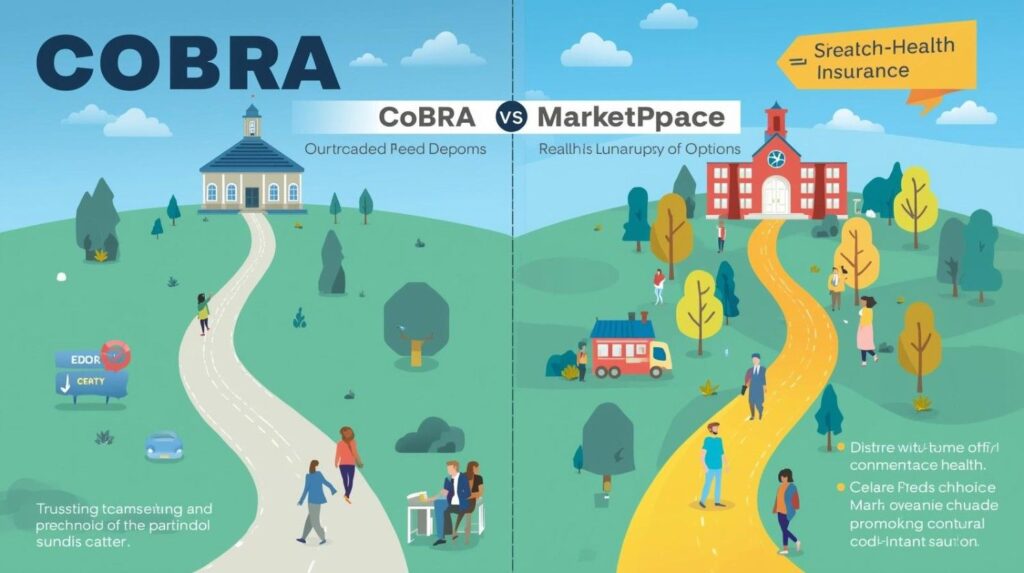
Most people choose the wrong health insurance plan because they don’t understand the real cost.
Quick Answer (2026)
Choose COBRA if:
✔ You need the same doctors immediately
✔ You are in active treatment
✔ You only need short-term coverage
Choose Marketplace if:
✔ You want lower monthly cost
✔ You qualify for subsidies
✔ You need long-term insurance
For most people, Marketplace is the better financial choice.
Compare Your Options
👉 Option 1 (Official Marketplace)
✔ Government site
✔ Check eligibility
✔ Safe and reliable
👉 Option 2 (Private Comparison Tool)
✔ Faster comparison
✔ See multiple insurers
✔ Personalized recommendations
What Is COBRA Health Insurance?
COBRA (Consolidated Omnibus Budget Reconciliation Act) allows you to continue your employer-sponsored health insurance after leaving your job.
Key Features:
- Same coverage as your employer plan
- Same doctors and network
- Temporary continuation (usually up to 18 months)
Biggest Drawback:
👉 You pay the full premium + administrative fee
Still Not Sure Which Plan Is Best?
Choosing health insurance can feel overwhelming.
Instead of guessing, compare real plans based on:
- Your income
- Your location
- Your expected medical usage
👉 See real plan options and estimate your actual yearly cost:
COBRA vs Marketplace Health Insurance: Key Differences
| Feature | COBRA | Marketplace |
|---|---|---|
| Cost | High (no employer contribution) | Lower (subsidies available) |
| Coverage | Same employer plan | Multiple options |
| Flexibility | Limited | High |
| Duration | Temporary | Ongoing |
| Enrollment | Automatic option | Requires selection |
👉 In most cases, Marketplace plans are more affordable.
Tools That Can Reduce Healthcare Costs
- Telehealth platforms
- Prescription discount tools
- HSA providers
- Preventive care tools
Provider Network: Will You Keep Your Doctor?
One major difference between COBRA and Marketplace plans is provider network access.
COBRA:
- Keeps your existing employer network
- You can continue seeing the same doctors
Marketplace:
- Network depends on selected plan
- Some providers may not be included
👉 If continuity of care is important, check network availability before switching.
👉 Read: In Network vs Out of Network Health Insurance
Compare Plans & Check Your Eligibility
If you want to find the best plan for your situation:
You can:
✔ See available plans in your state
✔ Check subsidy eligibility
✔ Compare total costs
✔ Enroll securely
This is the most reliable place to start if you are evaluating options.
Start Comparing Plans Today
Choosing the right plan can save you thousands annually.
👉 Check your eligibility and compare plans here:
Cobra vs Marketplace Insurance Cost Comparison 2026
Is cobra cheaper than private health insurance is a very common query?
Example Annual Cost
COBRA:
$900/month = $10,800/year
Marketplace:
$300/month = $3,600/year
Potential Savings:
$7,200/year
👉 That savings can cover rent, groceries, or emergency funds during unemployment.
When COBRA Might Be Better
COBRA can make sense if:
- You are in the middle of treatment
- You want to keep the same doctors
- You need short-term continuity
👉 Best for: Temporary coverage
When Marketplace Is Better
Marketplace plans are usually better if:
- You want lower monthly cost
- You qualify for subsidies
- You need long-term coverage
👉 Best for: Most unemployed individuals
Best Choice by Situation
| Situation | Better Option |
|---|---|
| Need same doctors now | COBRA |
| Cheapest monthly cost | Marketplace |
| Long-term coverage | Marketplace |
| Ongoing treatment | COBRA |
| Subsidy eligible | Marketplace |
| Recently unemployed | Marketplace |
Real-Life Example
COBRA Plan:
- Premium: $900/month
- Annual cost: $10,800
Marketplace Plan:
- Premium: $300/month
- Annual cost: $3,600
👉 Savings: $7,200/year
How to Choose Between COBRA and Marketplace
Step 1: Check Your Income
Your income determines:
- Subsidy eligibility
- Plan affordability
Step 2: Compare Total Cost
👉 Don’t compare just premium
Consider:
- Deductible
- Out-of-pocket maximum
👉 Read: How to Calculate Health Insurance Cost
Step 3: Evaluate Your Situation
Ask yourself:
- Do I need the same doctor?
- Is this short-term or long-term?
- Can I afford high premiums?
Total Annual Cost: COBRA vs Marketplace
Looking at monthly premium alone can be misleading.
Let’s compare total annual cost:
COBRA Plan
- Monthly premium: $900
- Annual cost: $10,800
Marketplace Plan
- Monthly premium: $300
- Annual cost: $3,600
👉 Potential savings: $7,200 per year
This difference can significantly impact your financial stability, especially during unemployment.
👉 Always compare total annual cost, not just monthly premium.
Ready to See Real Plans in Your State?
✔ Check subsidies
✔ Compare premiums
✔ View deductibles
✔ Enroll securely
Timeline: When You Can Enroll
After losing your job:
- You have 60 days to choose Marketplace
- COBRA can be elected retroactively
👉 Don’t delay your decision
Common Mistakes to Avoid
❌ Choosing COBRA without comparing Marketplace
❌ Ignoring subsidies
❌ Choosing based only on familiarity
❌ Missing enrollment deadlines
Financial Risk Comparison: COBRA vs Marketplace
Beyond premium, it’s important to evaluate financial risk.
COBRA:
- Higher premium
- Usually lower deductible
- More predictable costs
Marketplace:
- Lower premium
- Higher deductible (in some plans)
- Higher upfront risk
👉 Choosing the right plan depends on your savings and risk tolerance.
👉 Read: What Is Out-of-Pocket Maximum?
When Switching from COBRA to Marketplace Makes Sense
Many individuals start with COBRA but later switch to Marketplace plans.
This makes sense when:
- COBRA premiums become too expensive
- You qualify for subsidies
- You no longer need the same provider network
However, timing matters.
Switching at the wrong time may require waiting until Open Enrollment unless you qualify for a Special Enrollment Period.
👉 Always evaluate your options before committing long-term.
When COBRA May Not Be the Right Choice
COBRA may not be ideal if:
- You cannot afford high monthly premiums
- You qualify for Marketplace subsidies
- You need long-term coverage
- You want flexible plan options
In many cases, sticking with COBRA without comparing alternatives can lead to unnecessary financial burden.
👉 Always compare before deciding.
Frequently Asked Questions
Is COBRA better than Marketplace insurance?
Not usually. COBRA is more expensive, while Marketplace plans are often more affordable due to subsidies.
Can I switch from COBRA to Marketplace?
Yes, but timing matters. You may need a qualifying event or wait for Open Enrollment.
Why is COBRA so expensive?
Because you pay the full premium without employer contribution.
Is COBRA always more expensive?
Usually yes, because you pay the full premium without employer contribution.
Can Marketplace be cheaper than COBRA?
Often significantly cheaper if you qualify for subsidies.
Can I cancel COBRA later?
Usually yes, but Marketplace enrollment timing matters.
Is COBRA worth it for one month?
Sometimes yes if you need continuity of care.
Step-by-Step Decision Framework: COBRA vs Marketplace
If you are still unsure which option to choose, use this simple step-by-step framework:
Step 1: Check Your Monthly Budget
Start by understanding how much you can realistically afford.
- If $800–$1,200/month feels too high → COBRA may not be sustainable
- If you need a lower monthly cost → Marketplace is usually better
Step 2: Evaluate Your Medical Needs
Ask yourself:
- Do you have ongoing treatments?
- Do you need to keep the same doctors?
If yes → COBRA may be useful for short-term continuity
If no → Marketplace provides more flexible options
Step 3: Check Subsidy Eligibility
Many individuals qualify for significant savings through Marketplace plans.
👉 Lower income = higher subsidy = lower premium
This is one of the biggest advantages of Marketplace coverage.
Step 4: Compare Total Annual Cost
Don’t just compare monthly premium.
👉 Always calculate:
Premium + Out-of-Pocket Maximum
This gives your true financial exposure
Step 5: Think Short-Term vs Long-Term
- Short-term gap → COBRA may work
- Long-term planning → Marketplace is usually better
👉 Using this framework can help you avoid overpaying and choose the most cost-effective option.
Final Verdict: COBRA vs Marketplace
COBRA offers convenience, but Marketplace usually offers better value.
If cost matters, compare Marketplace plans first before paying expensive COBRA premiums.
Why You Should Compare Before Choosing
Health insurance pricing varies significantly between providers.
Two similar plans can differ by:
- $100–$300/month in premium
- Thousands in total yearly cost
👉 Comparing plans ensures you don’t overpay.
Compare Health Insurance Plans Based on Your Situation
The best way to find the right plan is to compare options based on:
- Your income
- Your state
- Your expected medical usage
Instead of guessing, use a comparison tool to see:
✔ Real monthly premiums
✔ Deductibles and out-of-pocket costs
✔ Subsidy eligibility
Explore More Health Insurance Guides
- How to Calculate Health Insurance Cost
- Bronze vs Silver vs Gold Comparison
- HDHP vs PPO Guide
- Open Enrollment Guide
👉 View all health insurance guides
About the Author
Shivakar Singh is the founder of Benefits Explained Simple, an educational platform focused on simplifying health insurance, workplace benefits, and financial decision-making. His work focuses on explaining complex benefit structures in clear, practical frameworks for working professionals.
“For a complete overview of how all these terms connect, read our US Health Insurance Guide.”